

Industry Trends
Flag Production Lead Time and Shipping Time: How Much Time Should You Allow?

Oct
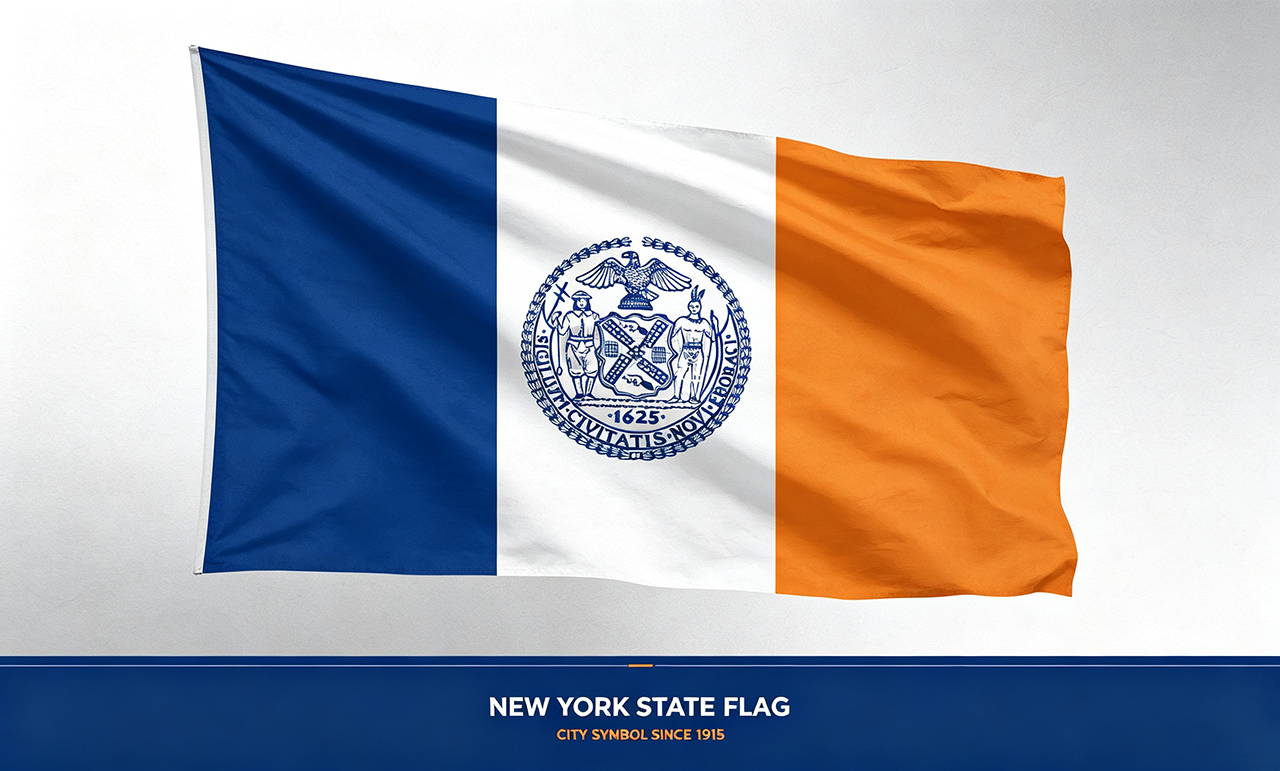
Whether you are ordering a few hundred hand-held flags for a trade show or a long run of custom banners for a retail rollout, the question that decides everything is timing. A flag that arrives two days late is not a flag — it is a missed event, an empty booth, or a rescheduled launch. This guide breaks down the two clocks that run on every order: how long it takes to make the flags, and how long it takes to get them into your hands.
What “Lead Time” Actually Covers
Buyers often treat the quoted flag production lead time as the whole story. In practice, a complete flag order lead time is made of four segments, and each one has its own clock:
- Artwork and proofing — converting your logo or design into a production-ready file.
- Production — printing or sewing, finishing, header and grommet work, quality checking, and packing.
- Transit — the shipping method you choose, plus customs clearance on arrival.
- Buffer — the padding that absorbs a revision, a port delay, or a delivery attempt that fails.
Understanding these separately is what allows you to plan realistically rather than optimistically.
Step 1: Artwork and Proofing
Proofing usually takes the least time but causes the most delays, because it depends on you. Vector artwork in AI, EPS, PDF, or SVG format moves through review quickly. A low-resolution screenshot or a photo of a printed business card may need to be redrawn, and that adds days before production can even be scheduled.
Two points matter here: the production clock normally starts when you approve the digital proof, not when you place the order, and it starts after payment terms are settled. If you approve a proof three days late, you should move your expected delivery date three days later.
Step 2: Production
Production time depends on the construction method and the quantity far more than on the design itself.
- Small custom orders (tens to a few hundred pieces), printed: typically around a week of production time.
- Sewn and appliquéd flags, where stripes and emblems are stitched rather than printed: longer, because more of the work is manual.
- Large-volume runs: add days for material procurement, panel cutting, and finishing at scale.
- Specialty finishing — fringe, pole sleeves, reinforced fly ends, custom header tape, individual polybagging — each adds a step.
For a sewn national-style flag with appliqué work, a production window in the range of two to three weeks is realistic. For printed promotional flags, one week is a reasonable planning assumption. Treat these as planning estimates and confirm the exact figure on your quotation, since material availability at the time of ordering also plays a role.
Flag Shipping Time by Method
Shipping is where expectations most often break down, because the cheapest option and the fastest option are rarely the same. Typical planning windows look like this:
- Express courier: roughly three to seven business days door to door, with tracking. The default choice for deadline-driven orders.
- Air freight: often seven to twelve days airport to airport, plus customs brokerage and inland delivery. Efficient for mid-sized shipments that are too big for courier rates.
- Sea freight: commonly several weeks in transit to a US port, plus clearance and inland trucking. Cost-effective for heavy volume when you have a comfortable schedule.
Customs clearance is not part of the carrier’s transit time, and it can vary with documentation accuracy. Shipping to a business address with a receiving dock, and providing a complete commercial invoice, usually reduces friction.
Seasonal Peaks That Add Days
Plan around the calendar, not just the factory. Chinese New Year is the largest disruption of the year: production slows and then stops for a period around the holiday, and schedules tighten in the weeks before and after it. The first week of October is another quiet window. On the US side, late-year holiday shipping volume and pre-election or pre-event rushes can stretch courier networks.
If your event lands in the first quarter, place your order well before the New Year shutdown. If it lands in November, order early enough that sea freight remains an option.
Building a Realistic Flag Order Lead Time
A simple formula works for most buyers: proofing days + production days + transit days + buffer. Add a buffer of at least a week for domestic events and two to three weeks for anything involving sea freight or a hard, non-negotiable date. If you are ordering samples first, remember that the sample cycle runs in parallel with nothing — it adds its own time.
Then work backward from your in-hands date rather than forward from today. Working backward is the single habit that separates a smooth order from a stressful one.
Rush Orders: What to Ask
If your timeline has already compressed, ask specifically about three things: whether production can be scheduled ahead of proof approval with a signed sign-off, whether a faster shipping tier is available for your volume, and which finishing steps could be simplified without harming the product. Sometimes dropping individual polybagging saves a day; sometimes nothing can be moved.
Before You Place the Order
- Confirm the exact flag production lead time in writing on your quote.
- Approve proofs promptly and in one round if possible.
- Verify the delivery address, including suite or dock details.
- Ask who handles duties and taxes under your shipping terms.
- Keep your in-hands date visible in every email to your supplier.
Time is part of the product. A clear-eyed plan for production and shipping protects your budget as much as your deadline, and it turns a potentially tense delivery into an ordinary one.
Email: flagswin@flag-win.vip
WhatsApp: +86 13031678795
Facebook: https://www.facebook.com/StarFlagFactory/
Alibaba.com: https://wfqyflag.en.alibaba.com/
