

Company News
Custom Flag Sample Approval Process: From First Proof to Mass Production
Sep
Ordering custom flags in volume is only as safe as the sample you approve. Whether you are a distributor placing a large seasonal order, a business ordering branded feather banners, or a school buying team pennants, the sample stage is where expectations get aligned before production capacity is committed. This guide walks through the full custom flag sample approval process used at flags-factory.cn, from the first artwork file to the green light for mass production.
Why the Sample Stage Deserves Its Own Workflow
A flag is a compound product: artwork, fabric, sewing, and hardware all affect the finished look. A logo that reads clearly on a screen may behave differently once it is printed on polyester knit and moving in the wind. Small shifts in thread color, seam placement, or header style change how the flag hangs. A structured approval process catches these issues while changes are still inexpensive, rather than after hundreds of pieces have been cut.
Stage 1: Artwork Review and Digital Proof
Everything begins with your file. Send vector artwork (AI, EPS, PDF) where possible; high-resolution PNG or JPG files can often be rebuilt, though clean vectors reduce risk. Our artwork team checks resolution, line weight, and how fine details will hold up at the actual flag size.
You then receive a digital proof — a scaled mockup showing layout, proportions, and approximate colors against the chosen fabric. The proof is a planning document, not a color guarantee, because screen colors and printed fabric colors behave differently. Treat it as a check on layout and content: spelling, spacing, orientation, and whether every element sits inside the safe sewing margin.
Stage 2: Deciding Which Sample You Need
- Digital proof only. Suitable for repeat orders where the artwork and specification have already been produced before.
- Pre-production sample. A physical flag made with the actual fabric, print method, sewing, and finishing you ordered. Recommended for new artwork, new fabric choices, or any order where color and construction matter.
For large runs or multi-item programs, a pre-production sample is the standard approach. It is the reference piece that the production floor and your own quality team will compare against.
Stage 3: Sample Making
Once the specification is locked — size, fabric, print or sewn construction, header type, grommet placement, and any accessories — the sample is produced. Typical construction choices include:
- Dye-sublimation printing on polyester knit or mesh for detailed, multi-color graphics.
- Screen printing for solid-color designs and straightforward logos.
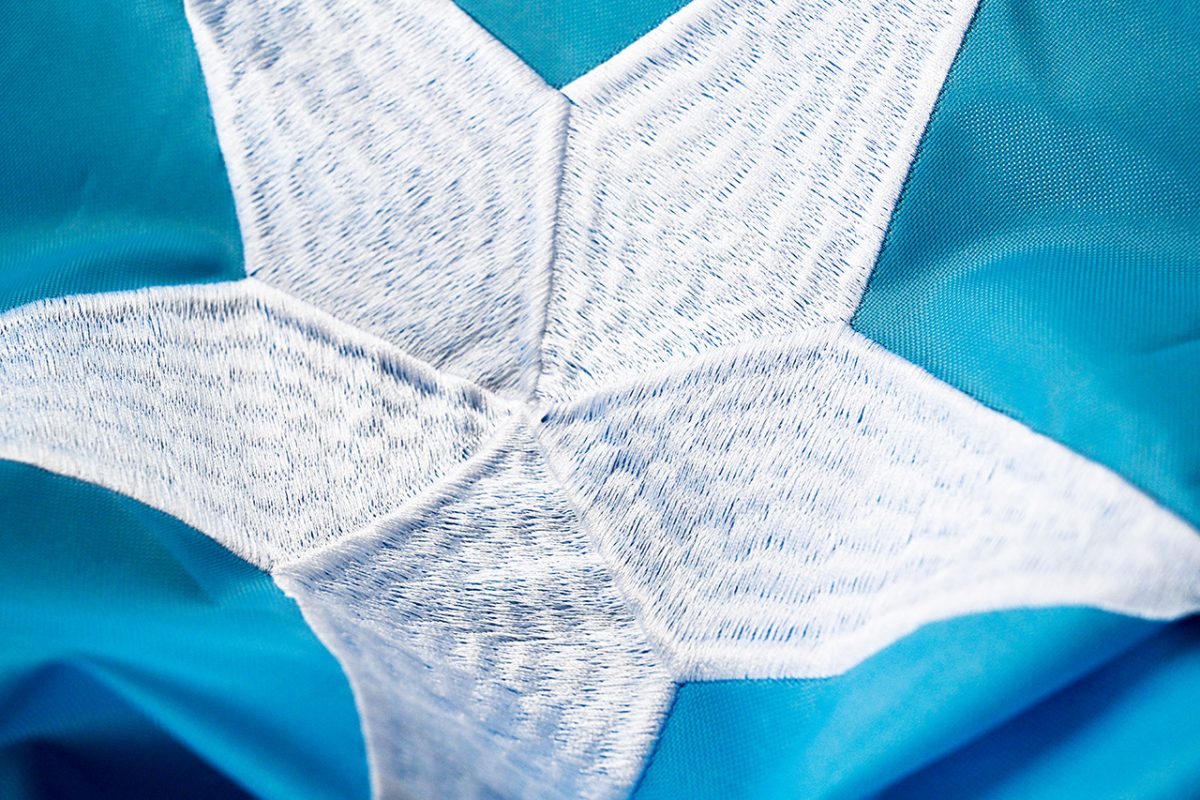
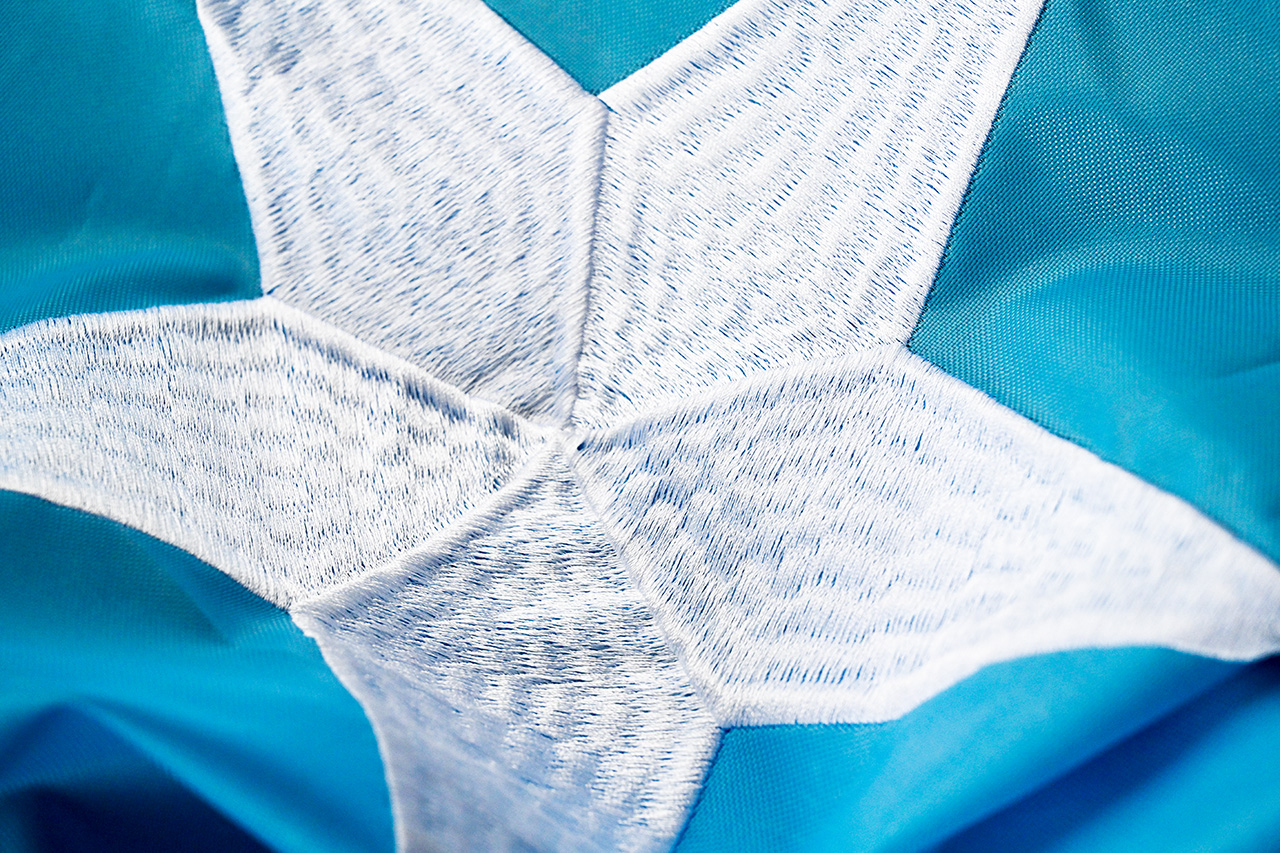
- Sewn and appliquéd construction for layered or embroidered elements, often used on ceremonial and indoor display flags.
- Finishing options such as a reinforced header, brass grommets, pole sleeve, or rope and toggle.
Samples are usually produced in the same facility and on the same equipment family as the eventual bulk order, so what you hold reflects what will be shipped.
Stage 4: Reviewing the Sample
When the sample arrives, check it under the conditions it will be used in. A practical review checklist:
- Compare the printed color against your brand reference or Pantone target in daylight, not under office lighting alone.
- Confirm dimensions, including the finished size versus the cut size.
- Inspect seams, hems, and the header for straight stitching and even tension.
- Verify grommet or sleeve placement matches the mounting hardware you plan to use.
- Check text legibility at the actual viewing distance.
- Confirm the sample matches the approved proof — if it does not, note exactly where.
Stage 5: Revisions, If Needed
Revisions are normal and expected. The most common causes of a revision request are color that reads differently than anticipated, artwork that needs to shift within the safe area, and hardware preferences. Send consolidated feedback in one message with photos or marked-up images. Round-trip revisions typically add time to the schedule, so gathering all comments from every stakeholder before replying keeps the project moving.
Stage 6: Written Approval and the Production Release
The sample stage closes with an explicit written approval — usually a short email confirming the sample and specification. That approval becomes the production reference. From there, mass production begins: materials are allocated, the print or sewing line is scheduled, and finished flags move through in-process checks and a final inspection before packing.
If anything changes after approval — quantity, size, or artwork — a new sample or at minimum a new proof is required, because the approved reference no longer applies.
Making the Cycle Faster
- Send vector artwork and your Pantone or brand color references up front.
- Confirm the exact finished size and hardware before sampling.
- Name one decision-maker for approval to avoid conflicting feedback.
- Ask about sample lead time when you place the request, so you can plan the bulk delivery date.
Ready to Start Your Sample?
The sample approval process is a short investment that protects the whole order. Send your artwork, size, quantity, and intended use to flags-factory.cn, and our team will confirm the right sample type and outline the next steps for your custom flag project.
