
Industry Trends
Sustainable and Eco-Friendly Flag Materials: What Buyers Should Know
Sep
Sustainable and Eco-Friendly Flag Materials: What Buyers Should Know
Every flag is a small object with a long supply chain behind it. Increasingly, the people buying them — procurement teams, event organizers, schools, sports clubs, and individual customers — want to know where the fabric came from, how it was printed, and what happens when the flag is retired. The good news is that sustainable options have moved from niche to mainstream, and the cost gap between conventional and eco-conscious materials has narrowed considerably.
What Actually Makes a Flag Material Eco-Friendly?
Three decisions shape the environmental profile of any flag:
- The fiber — virgin petroleum-based polymer, recycled feedstock, or a plant fiber.
- The color application — how ink or dye is applied, and what chemistry it contains.
- The end of life — whether the flag can be recycled, repurposed, or breaks down.
A flag can perform well on one of these and poorly on another. Recycled polyester printed with solvent inks and shipped in a plastic sleeve, for example, is a mixed result. Buyers who want a defensible sustainability story should look at all three.
Recycled Polyester: The Most Common Option
Many eco-conscious flags on the market today are made from recycled polyester, often spun from post-consumer PET bottles. The feedstock is diverted waste rather than newly extracted oil. In practical terms, it behaves much like conventional polyester: lightweight, receptive to dye, resistant to stretching when wet, and quick to dry. For outdoor flying, that combination is hard to argue with, which is why it dominates the category.
Honest caveats: it is still plastic. It can shed microfibers through washing and weathering, and its recyclability depends on local infrastructure. If end-of-life is your priority, plan a take-back or repurposing path rather than assuming curbside recycling.
Organic and Recycled Cotton
Cotton gives a heavier, softer hand that suits indoor displays, ceremonial flags, and hand-held banners. Organic cotton avoids synthetic pesticides and fertilizers in cultivation, while recycled cotton keeps textile waste out of landfill. Both are natural fibers that will eventually break down, though the inks and finishes applied to them may not.
Trade-offs to weigh: cotton absorbs water and becomes heavy in rain, and it can shrink or wrinkle. For permanent outdoor installations in wet climates, a synthetic is usually the more practical choice. Where a natural look and feel matters, cotton is a strong answer.
Hemp and Other Plant Fibers
Hemp is gaining attention as a flag material. It is strong, has a linen-like texture, and the plant grows with relatively little water and few inputs compared with conventional cotton. Hemp canvas has a natural resistance to mildew and rot, which makes it appealing for long-hanging indoor banners. It is heavier, coarser, and typically more expensive, and print detail is less crisp than on polyester.
Bamboo and other cellulosic fibers appear in some blends, though availability in flag-weight fabrics remains limited. Jute and canvas suit bunting and decorative pennants better than printed flags.
Recycled Nylon and Emerging Bio-Based Fabrics
Recycled nylon — sometimes sourced from recovered fishing nets and industrial scrap — offers high strength and abrasion resistance, making it a candidate for flags that face constant wind. Bio-based polymers derived from plant sugars are appearing in textile supply chains, but flag-weight options are still developing and often carry a cost premium. If a supplier offers them, ask what portion of the fiber is bio-based and how that claim is verified.
Inks, Dyes, and Finishing Treatments
The fabric is only half the story.
- Dye sublimation: heat transfers disperse dye into polyester fibers rather than laying ink on the surface. There is no heavy ink film, the print feels like the fabric, and it avoids the solvent load of conventional screen printing.
- Water-based pigment inks: lower VOC content than solvent inks, and well suited to cotton and other natural fabrics.
- UV-curable inks: cure instantly under ultraviolet light, using less energy than heat curing and emitting minimal solvent.
- Solvent inks: durable outdoors but carry the highest environmental cost.
Also ask about finishes. Fluorinated water-repellent treatments are under increasing scrutiny, and many suppliers now offer PFAS-free alternatives.
PVC-Free Banner Materials
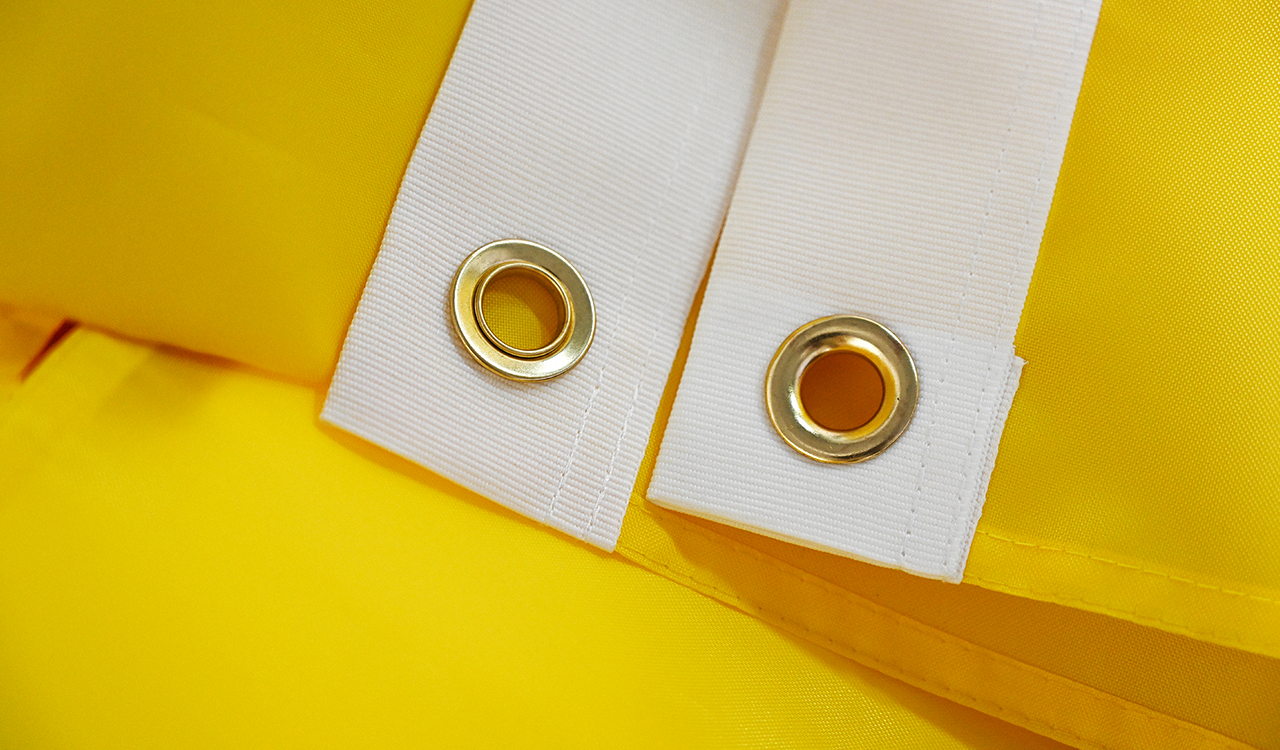
For large banners, the default has long been PVC vinyl, which is difficult to recycle and can release harmful compounds during production and disposal. Alternatives include PET and polypropylene banner films, fabric-backed banners, and printable textiles. These differ in stiffness, opacity, and how they handle wind load, so match the choice to the installation rather than assuming a direct swap. Remember the hardware too: ask about PVC-free hemming tapes, grommets, and edge finishes.
Packaging and End of Life
A sustainable fabric loses much of its value if it arrives wrapped in disposable plastic. Paper bands, recycled cardboard tubes, and reusable storage bags are straightforward improvements. For high-volume buyers, ask whether your supplier can consolidate shipments, and whether they offer repair services or guidance on repurposing retired flags into smaller items.
Questions to Ask Your Supplier
- What fiber is this, and is any portion recycled or bio-based?
- How is that recycled content claim verified?
- Which ink system do you use, and does it contain solvents or PFAS?
- Are the banner material and hardware PVC-free?
- How is the finished flag packaged and shipped?
- What care instructions will extend the flag’s usable life?
- Do you offer repair, take-back, or recycling guidance?
Matching the Material to the Job
Sustainability only works if the flag also performs. For everyday outdoor flying, recycled polyester with dye-sublimation printing is the practical default. For indoor and ceremonial use, organic or recycled cotton and hemp canvas bring a natural character that synthetics cannot match. For large-format banners, a PVC-free
