

Flag Guide
Heavy-Duty Flags for High-Wind and Coastal Areas: A Practical Buying Guide
Aug
Discover what makes heavy-duty flags different for high-wind and coastal locations. Learn about materials, stitching, and custom options from Flags Factory.
Why Standard Flags Fall Short in Coastal and Windy Locations
Flying a flag on a breezy inland day is one thing. Mounting a flag along a coastline or in a region known for strong, sustained winds is another matter entirely. In high-wind and coastal environments, flags face a unique combination of stresses: constant flapping, salt-laden air, intense UV exposure, and moisture. A standard flag may show signs of wear within a relatively short period, making heavy-duty flags a practical choice for these demanding settings.
Not all flags labeled “heavy-duty” are created equal, however. Understanding what actually goes into a rugged flag — and what questions to ask your supplier — can help you make an informed purchasing decision.
What Makes a Flag “Heavy-Duty”?
A heavy-duty flag is constructed with reinforced materials and stitching specifically designed to endure more challenging conditions than a standard flag. Here are the main factors that distinguish heavy-duty construction:
Fabric Weight and Composition
- Heavyweight polyester is a common choice for high-wind flags due to its dense weave and resistance to fraying.
- Some suppliers use spun polyester or a blended fabric that balances strength with a pleasing drape.
- For coastal areas, the fabric should also resist the corrosive effects of salt spray.
Reinforced Construction
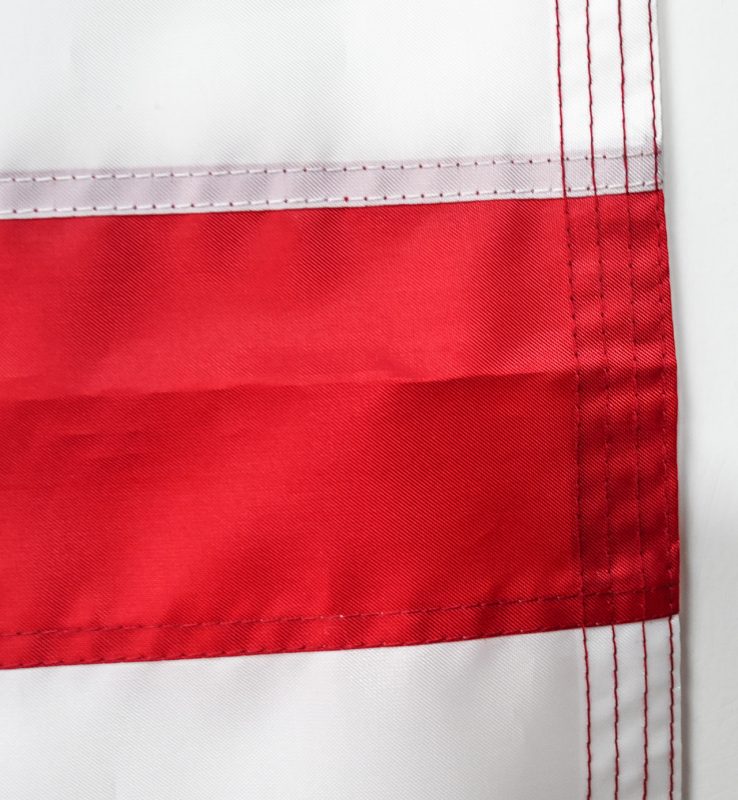
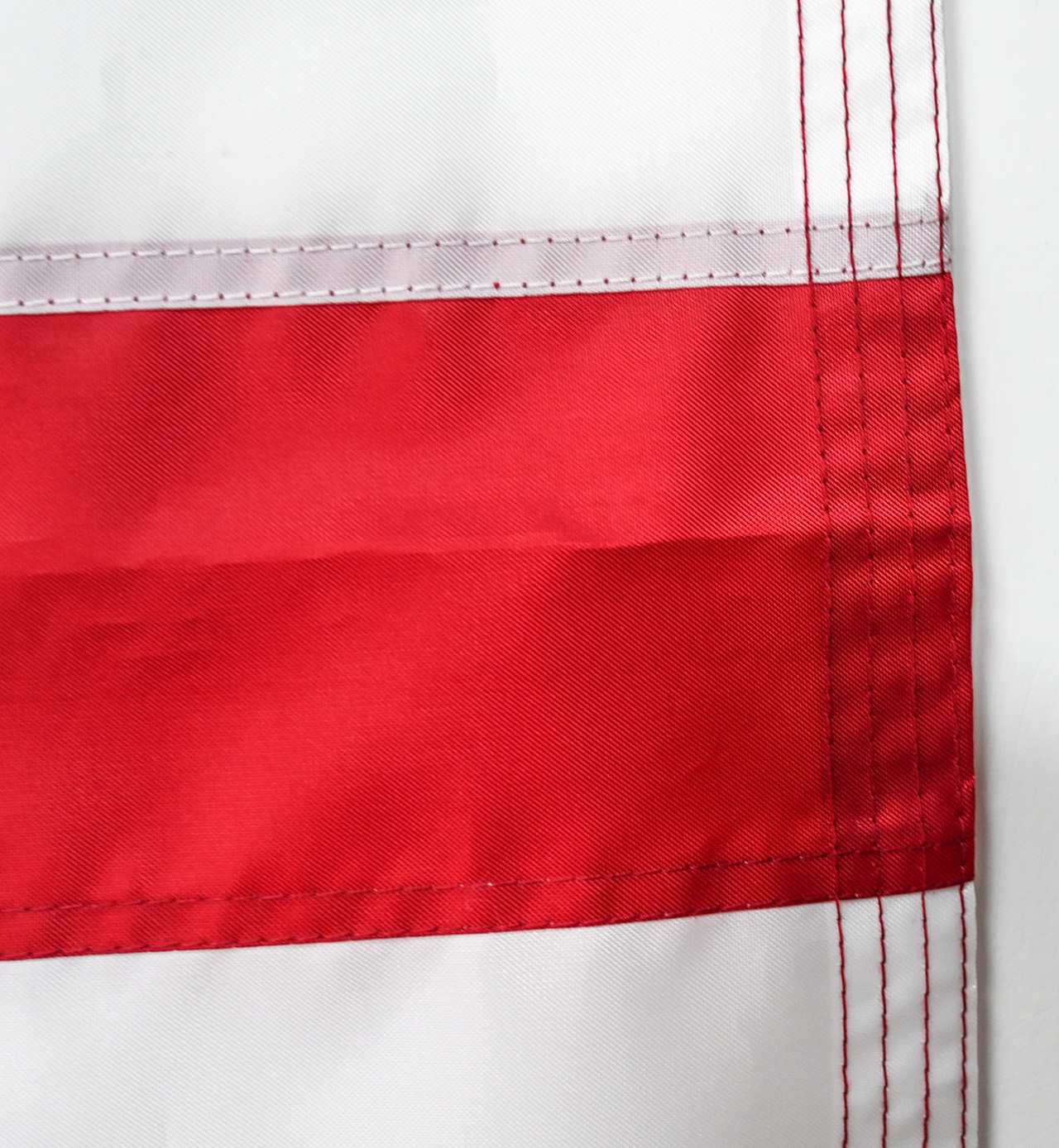
- Double-stitched hems along all edges add significant strength at stress points.
- Reinforced fly ends (the free edge of the flag) prevent tearing where the fabric takes the most strain.
- A strong canvas header with brass or stainless steel grommets provides a secure attachment point that resists corrosion.
Finishing Details
- Rope-and-toggle or snap-hook attachments can reduce stress on the flag itself, depending on your flagpole setup.
- Some heavy-duty flags include additional rows of stitching along the top and bottom hems for extra resilience.
The Coastal Environment: Salt, Sun, and Moisture
Coastal environments present particular challenges for flags. Salt from ocean spray can accelerate the degradation of both fabric and hardware. High UV exposure along open coastlines can cause colors to shift more quickly than inland. And the combination of moisture and salt can affect metal components, leading to corrosion.
When selecting flags for a coastal location, consider the following:
- Hardware materials: Brass or stainless steel grommets resist corrosion far better than standard metal alternatives.
- Fabric color fastness: Deep, well-saturated colors generally hold up well under UV exposure, but no fabric is entirely fade-proof. Discuss your color expectations openly with your supplier.
- Wind pressure relief: Some flag designs incorporate small vent panels or mesh sections to reduce wind pressure on the fabric — ask whether this option is available for your application.
Custom Heavy-Duty Flags from Flags Factory
At Flags Factory, we understand that high-wind and coastal installations require a different approach. Based in Weifang, Shandong, our production team offers customized heavy-duty flags tailored to your specific needs.
Customization options include:
- Choice of heavyweight polyester or other durable fabric materials
- Reinforced stitching patterns for high-stress applications
- Custom sizes — from small coastal garden flags to large commercial banners
- Brass or stainless steel grommets for corrosion resistance
- Custom printing for logos, text, or designs in full color
- Country flags, corporate flags, signal flags, or event flags
Whether you are a marina operator, a coastal resort, a government institution, or a homeowner near the shore, our team can help you select the right configuration for your specific conditions.
Caring for Flags in High-Wind Areas
Even the most robust flags benefit from routine care. Here are some practical tips to extend the useful life of your flag:
- Inspect regularly. Check seams, hems, and grommets for signs of wear, especially after severe weather events.
- Clean periodically. Gently wash your flag with mild soap and fresh water to remove salt buildup, which can accelerate fabric and hardware degradation.
- Store during extreme weather. During hurricanes, typhoons, or other severe storms, taking the flag down is a sensible precaution — no flag is designed to withstand extreme storm conditions indefinitely.
- Rotate your flags. If you have multiple flags, rotating them distributes wear across each piece and helps them last longer overall.
Choosing Between Standard and Heavy-Duty Flags
Not every location requires a heavy-duty flag. If your flag is displayed in a sheltered area with light winds, a standard flag may serve you well. However, if you are in a coastal region, on an exposed hillside, or in an area known for strong seasonal winds, the additional investment in a heavy-duty flag is a practical choice that can reduce replacement frequency over time.
Consider your specific factors:
- Maximum wind speeds in your area throughout the year
- Proximity to saltwater
- Sun exposure levels
- How often the flag will be displayed
Ready to Order Your Heavy-Duty Flag?
Flags Factory is here to help you find the right flag for your environment. Browse our selection online at flags-factory.cn or contact us to discuss a custom heavy-duty flag for your high-wind or coastal application. We are happy to answer your questions about materials, reinforcement options, and hardware choices.
